“Every contact leaves a trace” is how the Locard Exchange Principle which is really a hypothesis is summarized.
It has been written as follows:
Wherever he steps, whatever he touches, whatever he leaves, even unconsciously, will serve as a silent witness against him. Not only his fingerprints or his footprints, but his hair, the fibers from his clothes, the glass he breaks, the tool mark he leaves, the paint he scratches, the blood or semen he deposits or collects. All of these and more, bear mute witness against him. This is evidence that does not forget. It is not confused by the excitement of the moment. It is not absent because human witnesses are. It is factual evidence. Physical evidence cannot be wrong, it cannot perjure itself, it cannot be wholly absent. Only human failure to find it, study and understand it, can diminish its value.
The hypothesis goes that there are basically two types of physical evidence that come as a result of the Locard Exchange Principle:
- Gross Evidence
- Trace Evidence
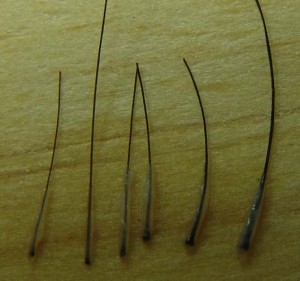

If one is willing to accept this hypothesis, then it becomes quite clear and evident that especially with trace evidence the possibility of contamination is high and great preventative measures must be taken by first responders and subsequent crime scene processors so as to not negatively impact the physical evidence at the scene. This is why dedicated clean suits and the like are necessary when processing a scene.
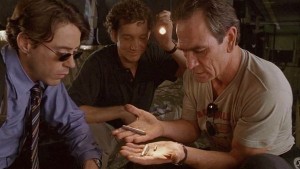
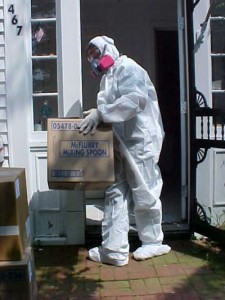
The whole point is to try to have little to no impact on the scene or the collected evidence so as to not contaminate the scene or the evidence.

 The McShane Firm | DUI Lawyers
 Pennsylvania DUI Blog
Attorney Stewart Bersaw says:
This site does a amazing job talking about this concept!
Justin J. McShane says:
Thank you. Consider joining in our facebook page and also consider trying to participate in our weekly forensic science geek of the week challenge.
michelle says:
teach HS Forensic Science
you give me clear and useful information Thanks!
Justin J. McShane says:
Thank you Michelle! I do teach lawyers forensic science topics which the typical lawyer has about a HS education in science.