It appears as if someone is listening in Congress. On May 5, 2010, the Senate Judiciary Committee released a “Draft Outline of Forensic Reform Legislation.”
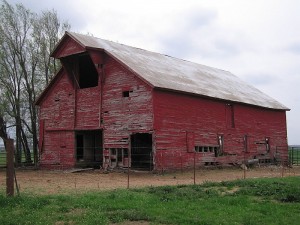
In my opinion: It is a good start, but with a target as big as a barn as identified painstakingly by the NAS report, the Senate Judiciary Committee seems to have missed the mark in some important areas.
Some very good first steps:
- The establishment of a national Forensic Science Commission (FSC) which will act as a national clearing house to do the following:
- establish accreditation programs crime labs and issue such accreditations as necessary,
- establish competency standards for proficiency testing within disciplines,
- create and perform proficiency programs on those accredited or those seeking accreditation,
- issue certifications for labs and perhaps to specific forensic science practitioners
- An examination of the laughably low requirements to be qualified as an expert in Court
The FSC shall consider whether and in what form a new federal rule of evidence or procedure would be appropriate requiring that all those who testify in federal court as forensic experts be certified. The FSC must consider how any such rule would be implemented in a way that guarantees access by defense counsel to certified experts.
- The funding for research to explore whether or not the techniques used by the various forensic science disciplines that now exist can scientifically make the conclusions and assertions that they claim now to make. In other words the production of true scientific and robust validation studies that will prove or disprove the techniques employed as being suitable for their intended purpose. Without this major first step, it seems as if we are doomed to simply put a cosmetic face lift on the underlying problem. What is the use of all of this reform if we cannot have confidence in the very method that is accredited by the new national Forensic Science Commission (FSC)? This needs to be first priority. Both the National Institute of Standards and Technology (NIST), National Institute of Justice (NIJ) and National Science Foundation (NSF) will be called upon to help coordinate, fund and monitor the peer-reviewed research conducted.
- Establishing standard nomenclature to be used within and without a particular discipline.
Some troubling parts:
- These provisions seem to only apply to federal labs. While the exposure of the FBI crime lab and the efforts of American heroes like Dr. Frederic Whitehurst, PhD has well exposed the systemic issues that are/were present in federal labs and the current exposure of the lack of published laboratory protocol at the DEA labs, the Senate Judiciary Committee should recognize that the sheer bulk in terms of the quantity of forensic science that is performed in the United States is at the local and state level. Also, at least at most federal labs, there are actually credentialed scientists who hold a brick and mortar degree in the research field that they are preforming analysis in the lab; whereas, in stark contrast, at the state and local level, by and large, those labs are populated with glorified promoted traffic cops who have no scientific underpinning and are in essence non-technical lay people who repeat a process.
- Grandfathering of broken programs. As written in the draft:
Where a Subcommittee determines that one or more qualified professional certifying organizations exist for a particular discipline, the Subcommittees will generally delegate the determining of standards for certification to those organizations. Should a Subcommittee decide to do so, it must perform regular and thorough oversight and reassess the decision to delegate periodically. The designated professional organization must be open and transparent in its process.
This will likely mean that the dysfunctional system of ASCLD-LAB will continue to exist and be as it is now, the rubber stamp of the forensic science world. The legacy program is a disgrace wherein just because your lab has been doing it long enough you do not need to become “tested” and accredited as newer labs would have to do to achieve the rubber stamp. The simple fact that not a single lab that has been ASCLD-LAB certified has ever lost (or even been warned that is going to lose) its accreditation is also troubling.
- The grandfathering of existing non-technical lay people who will leave by attrition:
The FSC will determine a process for current practitioners to test in to certification, or become certified in a gradual multi-part process, with waiver of some or all degree and training requirements. (emphasis added)
- The FSC shall operate out of the office of the Deputy Attorney General. Even though the current language of the draft includes the appointment of both post-conviction advocates and defense counsel, this is most disappointing especially given the explicit recommendation of the NAS report to totally divorce forensic science from prosecution.
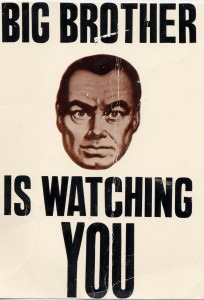
We have seen the political censoring of science before. Why can we not learn from our errors in this regard? Why put the fox in charge of the hen house? The need for independence is demonstrable and apparent.
A good start but far from the perfect solution.
A special thank you to Steven Oberman, Esquire of Tennessee who is the current Dean for the National College for DUI Defense Inc. for bringing this to my attention.

 The McShane Firm | DUI Lawyers
 Pennsylvania DUI Blog
Free CNA Training says:
this post is very usefull thx!