A crime scene is a dynamic workspace fret with challenges and perils. If the crime scene investigator is not careful, then the crime scene investigator can negatively impact the scene and compromise the physical evidence.
We had examined before the importance of physical and forensic evidence and how the theory of the Locard Exchange Principle plays into the crime scene as well as the need to properly secure the crime scene to avoid altering it and contaminating the contents of the scene.
So, now that we have identified a potential problem, is there a potential solution or a way to minimize the impact of it all?
There are two major mathematical methods that should be used in properly examining a crime scene: The Cartesian Coordinate method (rectangular), or the Polar Coordinate method (circular).
This post will focus on the Cartesian Coordinate method.
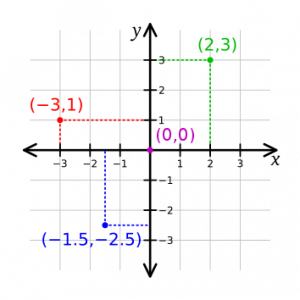
The Cartesian Coordinate method is a coordinate system for which the coordinates of a point are its distances from a set perpendicular lines that intersect at the origin of the system. A system for locating and measuring points in space based on a rectangular coordinate system with a three dimensional axis labeled X, Y, Z.
It is using this mathematical method to examine, to measure and to record the scene as we process it that allows us to be able to later extract the full meaning of the evidence collected. It is a relational concept whereby objects and evidence can be memorialized for its spacial meaning.
This method is usually best used at a scene that has well defined boundaries such as a room.


 The McShane Firm | DUI Lawyers
 Pennsylvania DUI Blog