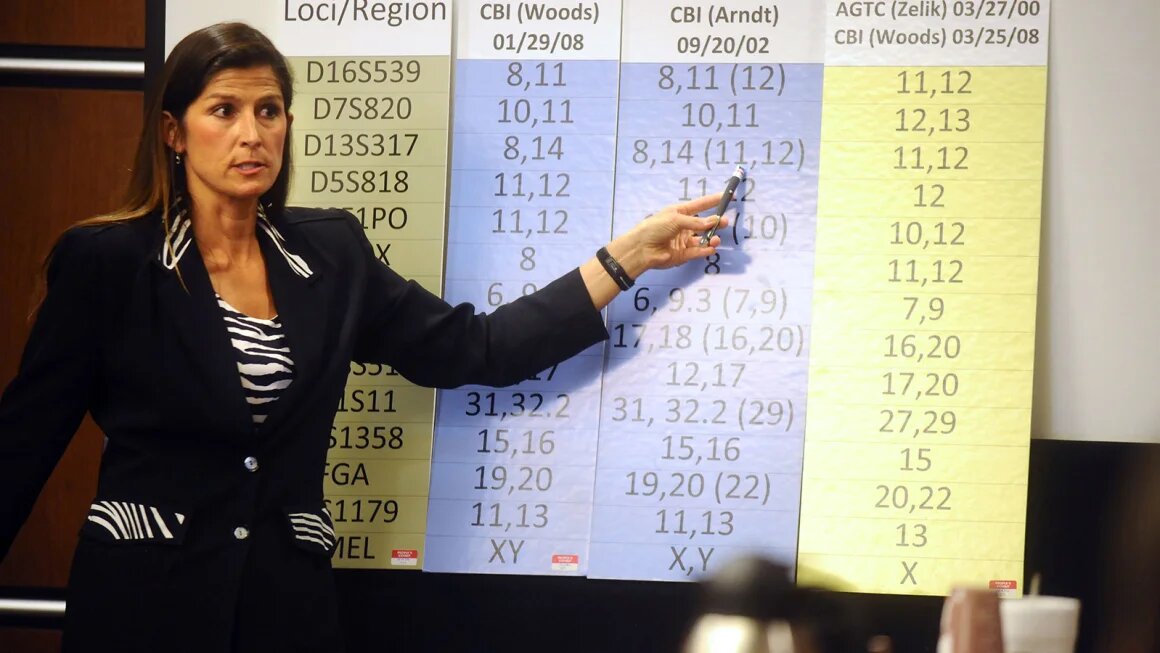
Ahh yes. It’s time for our latest edition of “Lifestyles of the Newly Retired.” Here is another example of the greatest retirement plan in all of government. If you do bad science, with potential false convictions or undue exonerations, you are tampering with evidence. In all 50 states and in the federal system, tampering with evidence is illegal. There apparently continues to be a “forensic science pass” for those in the crime laboratory who break the law. Yet again, the laboratory frames this as a rogue analyst (a bad apple) and not as a total failure of the quality assurance program.

Pioneer in DNA testing quits Medical Examiner’s Office over lab violations

A top deputy at the medical examiner’s office who has been lauded for her work in DNA testing resigned amid revelations that she sidestepped lab protocol in at least two criminal cases, the Daily News has learned.

The abrupt April 19 departure of Theresa Caragine is the latest snafu to befall the office and has already affected ongoing cases in the Bronx and Brooklyn, according to court papers.

Hundreds of rape cases the office examined were already under review due to potentially botched testing by lab tech Serrita Mitchell, 55, who resigned but later denied wrongdoing.

That scandal also led to the suspension of Mecki Prinz, the office’s forensic biology director. Prinz, 55, resigned May 3.

The latest debacle has opened the door for defense lawyers to question DNA evidence in several cases.

Caragine’s actions came to light because Legal Aid Society lawyers have been digging for details about her resignation and complex DNA testing she oversaw, said Alan Gardner, head of Legal Aid’s DNA unit.

Along with partner Adele Mitchell, Caragine, 43, pioneered an acclaimed but controversial DNA testing tool, which helps identify genetic profiles in samples from multiple people, a difficult task.

“I believe that the problems that are revealed in the disclosures obtained in the Brooklyn case are the tip of the iceberg,” Gardner said.

Reached Wednesday night at her upper West Side brownstone, Caragine said simply, “It’s not true,” and declined to elaborate.

The Bronx district attorney’s office was forced to address the matter Wednesday in the armed-robbery trial of Rayeheame Hill, 31.

Legal Aid lawyers questioned a DNA sample taken from a .38-caliber revolver police recovered, demanding to know whether Caragine was involved in testing the sample. They also requested details about Caragine’s “Forensic Statistical Tool,” querying prosecutors in at least one Brooklyn criminal case as well.

Assistant District Attorney Rachel Singer responded in court papers Wednesday with details from the medical examiner’s office.

In two recent cases, according to that office, Caragine overruled staffers who disagreed with her analysis of DNA results. She was supposed to refer the disagreement to the department’s technical leader, who has the final say. But she made the rulings herself and was ratted out by her underlings.

Singer said Caragine was not involved in testing the sample in Hill’s case, and Bronx Supreme Court Justice Albert Lorenzo ruled Wednesday that the DNA evidence is allowable at trial.

The Bronx DA’s office is not concerned about the Caragine affair, a spokesman said.

“Dr. Caragine is a highly respected professional in her field who made an error in judgment in not following protocol,” said spokesman Steven Reed. “That does not affect the strength of the science or the forensic findings. We are confident that cases will not be unduly affected by her departure.”

The medical examiner’s office agreed.

“Her resignation has nothing to do with the quality of her work. Her work is impeccable,” office spokeswoman Ellen Borakove said in a statement.

She added that Caragine’s findings in the two cases where she disobeyed protocol ended up being accurate.

The technical goal of any calibration related effort is t0 achieve a meaningful and valid CMP. According to The International Union of Pure and Applied Chemistry (IUPAC):

Chemical Measurement Process (CMP): An analytical method of defined structure that has been brought into a state of statistical control, such that its imprecision and bias are fixed, given the measurement conditions. This is prerequisite for the evaluation of the performing characteristics of the method, or the development of meaningful uncertainty statements concerning analytical results.

Per IUPAC:

Calibration Function: The functional (not statistical) relationship for the chemical measurement process, relating the expected value of the observed (gross) signal or response variable  to the analyte amount . The corresponding graphical display for a single analyte is referred to as the calibration curve. When extended to additional variables or analytes which occur in multicomponent analysis, the ‘curve’ becomes a calibration surface or hypersurface.

Say What???

Every analytical measurement device has to be taught how to do its job. When it is born, it is born deaf and dumb. It knows nothing. It has to be taught right from wrong. It is this teaching right from wrong that is part what we refer to in the courtroom as simply “calibration.”


Before we get to what is calibration and how it is best performed, we have to get to our old friend chromatography. Chromatography is the science of separation of different things in analytical chemistry. If we do not have a “good” qualitative result, then we cannot possibly have a meaningful quantitative result. We seek the holy grail: Specificity!

For example, in courtrooms all across the United States perhaps upwards of a hundred times per day or more, Gas Chromatography with Flame Ionization (GC-FID) results are reported as specific results. To prove specificity there is no magic number that any laboratory has to use in their volatile mix. The most that they can say in the case of blood ethanol analysis, if done correctly, is that EtOH has been separated from whatever else is in that mix. If the laboratory wants to put in two compounds in their separation mix, then that is their choice. But when they only put in two compounds in their separation matrix, they cannot come into court and legitimately say that the laboratory proved that it has identified ethanol exclusively (specifically). In that instance, the most that the laboratory can say is that the EtOH is not the other compound as proven by the separation.

In GC-FID, it is all about what level of risk of being wrong they are willing to assume in the design of their chromatographic conditions and what is in their separation matrix. The more compounds in the separation matrix that show true separation from the target analyte, the more they have proved separation from those compounds. If it isn’t in your mix, you haven’t proven separation. If there is scientific integrity in a laboratory, they will admit that they never get to true proof of specificity using GC-FID. It is beyond the capabilities of the technology.

So again, without specificity, we can have no confidence in any quantitative result that follows.

Calibration versus calibration check

There is a large difference between the scientific terms “calibration” and “calibration check.” The act of calibration in essence is “wiping the slate clean” of all prior “teaching” of the machine its quantitation measurement (how much), and then “re-teaching” the machine through a series of actions its quantitation that can later be used to infer quantitation for subsequent testing of unknowns (e.g., a motorist’s BrAC).

In order for there to be confidence and validity of any measurement, the “teaching” of the machine its quantitation through the act of calibration must be based upon the use of Certified Reference Materials (CRMs) as defined by the International Organization for Standardization (ISO) Guides.

Further calibration is best performed in a 5×5 method covering a suitable linear dynamic range where machine operators might expect results of the unknowns. The 5×5 method refers to five different concentrations tested five different times resulting in 25 distinct measurements. Zero cannot be a data point in the act of calibration as we are incapable of measuring the total and complete absence of every atom, the experts stated. The calibration of a machine requires metrologically meaningful and robust statistical analysis of the results to determine the linearity of the detector.

By doing this 5×5 method through a suitable linear dynamic range with statistical evaluation of the results as a minimum means of calibration, we can meaningfully evaluate both precision (calibration or systemic error) and bias (accuracy or lack of trueness). It is in this manner that one can be capable of fairly and validly evaluating unknowns.

This is to be distinguished from a “calibration check.” A calibration check is a “quick and dirty” method to check on the calibration of the device. The key distinguishing feature is that with a calibration check, even if there is totally verified bias or lack of precision, the device is never adjusted or re-calibrated so long as the results of the calibration check meet some sort of arbitrary “acceptance criteria.” Even if bias is found by the calibration checks, the result of the later unknowns that are tested are never corrected or adjusted to account for this known error.

This 5×5 method is the minimum scientific method for calibration.

Other models

In fact, the Scientific Working Group for Forensic Toxicology (SWGTOX) Doc 003 Revision DRAFT Out for Public Comment – June 18, 2012 reads:

The calibrator samples shall span the range of concentrations expected. At least six different non-zero concentration levels shall be used to establish the calibration model. The concentration levels shall be appropriately spaced across the calibration range. A minimum of five replicates per concentration level is required and the combined data are used to establish the calibration model. The replicates to establish the calibration model shall be in separate runs. The origin shall not be included as a calibration point. Once the calibration model is established, it shall not be arbitrarily changed to achieve acceptable results during a given analytical run. For example, one shall not switch from an unweighted linear model to a weighted linear model in order to adjust for changes in instrument performance. Although it has become widespread practice, it is emphasized that a calibration model cannot be evaluated simply via its coefficient of correlation…. Once the calibration model has been established, fewer calibration samples (i.e., fewer levels or single/fewer replicates) may be used for routine analysis. However, if fewer calibration samples are chosen, they must 1) include the lowest and highest calibration levels used to establish the model, 2) include no fewer than four non-zero calibration points, and 3) must be used for the accuracy and precision studies of the validation. http://www.swgtox.org/documents/Validation_public_comment.pdf (last accessed May 8, 2013).

IUPAC advises for method validation purposes, the use of six or more calibration standards should be run, preferably at least in triplicate, in a randomized way. “Harmonized Guidelines for Single-Laboratory Validation of Methods of Analysis, IUPAC Technical Report 2002” (prepared by M. Thompson, S.L.R. Ellison and R. Wood), Pure Appl. Chem. 74 (2002) 835. ISO 8466 states that for an initial assessment of the calibration performance, the laboratory should employ at least five calibration standards, although it recommends 10, and 10 replicates of the lowest and highest standards. ISO 8466, Water Quality—Calibration and Evaluation of Analytical Methods and Estimation of Performance Characteristics (Parts 1 and 2), International Organization for Standardization (ISO), Geneva, 1990 and 1993.

Suppose the following:

  • You are driving home.
  • You get stopped by the police.
  • You are arrested for DUI.
  • You are requested and give a sample of your blood.
  • The blood goes to a laboratory and is analyzed.
  • The results get transmitted to the police a few days later.
  • The  police type it up a few says later.
  • Now 8 days since the testing goes by before the judge signs the summons.
  • You get the notice of the charges 11 days after the testing is done.
  • You are charged with a per se DUI violation where the only elements of the crime that the government has to prove (1) you were driving (or where in actual physical control) a vehicle, and (2) that the amount of EtOH was above a prohibited level. So, quite literally the number is the crime.
  • You see there is a number for the EtOH in the form of the BAC. This means you get a number from someone’s analysis at some laboratory that just does not make sense. It is way too high.

Perhaps you think to yourself, “That can’t be my sample” or “They messed that thing up.” You think to yourself that you want it retested because you know it is wrong.

However, the laboratory has a internally published procedure that states that all blood evidence is destroyed after 7 days of the analysis.

Is this fair?

Is this right?

Is this legal?

How important is chain of custody?

The Technical Working Group on Biological Evidence Preservation in its publication entitled “The Biological Evidence Preservation Handbook: Best Practices for Evidence Handlers” which is a consensus document published by The Department of Commerce-National Institutes of Standards and Technology in cooperation with National Institute of Justice, the Office of Law Enforcement Standards and a committee of 22 scientists, prosecutors, evidence technicians and police. They wrote:

When possible, every effort should be made to notify all relevant parties during the disposition process. Almost all states that have evidence retention statutes also have mechanisms that authorize destruction prior to the regularly scheduled timeframe… These provisions bring all parties’ attention to the existence of the evidence and the question of the continued need to retain the evidence. These laws usually require that the holding agency provide advance notice to the court and all relevant parties (i.e., the prosecutor, the defense attorney, and the defendant) and afford an opportunity for the parties to request continued retention of the evidence or to consent to the early disposition of the evidence.

The justice system requires that proceedings be conducted fairly. A compromised chain of custody can lead to an incorrect verdict. The chain-of-custody record documents the chronological movement, location, and custodial status of physical evidence from the time it is collected through the final disposition. Each person involved with evidence collection, storage, and handling must be able to attest to the condition of an evidence package (e.g., sealed/not sealed or damaged), any changes made to the contents of that package, and the condition of all transfers. Every transfer of evidence between individuals and storage locations must be documented. A break in the chain of custody can be grounds for challenging the admissibility of evidence.

Never not once in the thousands of DUI cases that my office has handled has anyone notified the defense of the potential destruction of blood evidence. Not once. This is wrong.

Humpty Dumpty sat on a wall,
Humpty Dumpty had a great fall.
All the king’s horses and all the king’s men
Couldn’t put Humpty together again

In essence, this is the view held by The Technical Working Group on Biological Evidence Preservation in its publication entitled “The Biological Evidence Preservation Handbook: Best Practices for Evidence Handlers” which is a consensus document published by The Department of Commerce-National Institutes of Standards and Technology in cooperation with National Institute of Justice, the Office of Law Enforcement Standards and a committee of 22 scientists, prosecutors, evidence technicians and police. They wrote:
Across the nation, headlines tell the story of evidence that has been mishandled, misplaced, lost, or destroyed. Often the blame for these mishaps is directed toward property and evidence custodians housed in law enforcement agencies nationwide. Many law enforcement agencies do not properly address, recognize, or support the efforts of their property rooms. Although these agencies bear ultimate responsibility for maintaining the integrity of the evidence, the real problem lies with a systemic failure to properly account for evidence from collection through final disposition. This failure reduces the public’s confidence in the criminal justice system to produce just results in criminal and civil proceedings.
This is very true. At the end analysis, there are always major questions that surround any sort of biological specimen sampling. Validated steps must be put in place so as to insure the integrity of the biological sample and to make sure that it remains representative of the source. If we do not have tested and validated methods for specimen collections, then we can have no assurance that the sample is indeed representative of the whole from the purported source. If we do not have tested and validated methods for specimen handling post collection, then we can have no assurance that the sample collected remains in tact and not altered. These are fundamental “givens” that have been taken for granted for far too long in our criminal justice system.
How much training to evidence technicians and line officers get in the proper collection and preservation of biological evidence?
Surprisingly, next to none.
All of the most perfect and beautiful analysis in the world leads to one thing: “Garbage In=Garbage Out.” Collectively (defense lawyers, analysts and prosecutors) spend so much time focusing on analytical error. We all need to be concerned about pre-analytical error.
A colleague of ours Brian Manchester came out of court during the dog days of summer to find the below. This was so bad that he had to take pictures of it. Whether these specimen kits contain specimens or are “empty” kits, keeping these kits in the back of the patrol car (where prisoners go) in the hot sun and in the enclosed car full of heat, is certainly not best practice.
PSP patrol car with blood test kits in the glaring sun

PSP patrol car with blood test kits in the glaring sun

I’ll just let this one speak for itself….

Marijuana Field Test False Positive Leads to SWAT-style Raid of Innocent Home Owner’s Basement Lawful Tomato Growing

Leawood family gets some answers about marijuana raid

Bob Harte says police saw them buying hydroponic system for indoor garden

LEAWOOD, Kan. —A Leawood family tried for more than a year to find out why police raided their house looking for marijuana.

The Hartes said they simply wanted to grow a garden in their basement. But on April 20, 2012, Johnson County sheriff’s deputies raided their home.

Bob Harte said deputies forced him to the floor and scared his wife and children that day looking for a marijuana-grow operation.

KMBC’s Cliff Judy reported that the family had a basement garden with hydroponic equipment.

After they filed a lawsuit looking for answers, the Hartes found out that police spotted them buying the hydroponics. Deputies then searched their trash and found green vegetation that registered a false positive for marijuana.

Harte said finally seeing the evidence that led to the search warrant still stupefies him.

“Well, that they would send out this team with assault rifles and a battering ram to take out the front door with really little evidence that wasn’t great evidence,” Harte said.

The Johnson County Sheriff’s Office won’t comment since the Hartes are planning future legal action.


There is little doubt that there is a research push for roadside testing for screening purposes for drugs of abuse and illicit drugs. All one needs to do is to come to any national or regional forensic science meeting or pull the various agendas to see what is being discussed. It’s oral fluid roadside testing and now the holy grail-roadside breath testing for drugs.

Obviously, this technology needs to be vetted by the defense community via rigorous Frye and Daubert hearings.

Here is an article that was in Science Daily on this perennial quest for that Holy Grail (full source at Olof Beck, Niclas Stephanson, Sören Sandqvist, Johan Franck. Detection of drugs of abuse in exhaled breath using a device for rapid collection: comparison with plasma, urine and self-reporting in 47 drug users.Journal of Breath Research, 2013; 7 (2): 026006 DOI:10.1088/1752-7155/7/2/026006):

Breath Study Brings Roadside Drug Testing Closer

Apr. 25, 2013 — A group of researchers from Sweden have provided further evidence that illegal drugs can be detected in the breath, opening up the possibility of a roadside breathalyzer test to detect substances such as cocaine, amphetamines and cannabis.

Using a simple, commercially available breath sampler, the researchers have successfully identified a range of 12 substances in the breath of 40 patients recruited from a drug emergency clinic in Stockholm.

Their findings have been published today, 26 April, in IOP Publishing’sJournal of Breath Research.

Blood, urine and saliva are the most popular methods for detecting illegal drugs and are already used by law enforcement in a number of countries; however, exhaled breath is seen as a promising alternative as it’s easier to collect, non-invasive, less prone to adulteration and advantageous when location becomes an obstacle, such as at the roadside.

Exhaled breath contains very small particles that carry non-volatile substances from the airway lining fluid. Any compound that has been inhaled, or is present in the blood, may contaminate this fluid and pass into the breath when the airways open. The compounds will then be exhaled and can subsequently be detected.

In this study, researchers from the Karolinska Institute in Stockholm collected breath, blood plasma and urine samples from 47 patients (38 males, 9 females) who had taken drugs in the previous 24 hours and were recovering at a drug addiction emergency clinic.

Interviews were also undertaken with each patient to assess their history of drug use.

The breath samples were taken using a commercially available sampling device — SensAbues — and then analysed using liquid chromatography and mass spectrometry.

The portable sampling device consists of a mouth piece and a micro-particle filter. When a patient breathes into the mouth piece, saliva and larger particles are separated from the micro-particles that need to be measured.

The micro-particles are able to pass through and deposit onto a filter, which can then be sealed and stored ready for analysis. Breath samples were analysed for twelve substances.

Alprazolam and benzoylecgonine were detected in exhaled breath for the first time, whereas for methadone, amphetamine, methamphetamine, cocaine, morphine, 6-acetylmorphine, tetrahydrocannabinol, buprenorphine, diazepam and oxazepam, the results confirmed previous observations.

“Considering the samples were taken 24 hours after the intake of drugs, we were surprised to find that there was still high detectability for most drugs,” said lead author of the study Professor Olof Beck.

“In cases of suspected driving under the influence of drugs, blood samples could be taken in parallel with breath when back at a police station. Future studies should therefore test the correlation between blood concentration of drugs of abuse and the concentrations in exhaled breath.”

As more and more details emerge with the tragedy in Boston and as we now know that there is a suspect in custody, we all breathe a collective sigh of relief. I am sure that all who read this post are shocked and appalled by this needless loss of life and horrific deliberate and inexcusable acts of destruction. All of our hearts go out to the deceased, the survivors, the helpers, and their family and friends.

Lots of questions still exist about what happened at the Boston Marathon Bombing. In April/May/June of 2012, this blog hosted a series of guest posts from Dr. Frederic Whitehurst, PhD who used to be a FBI agent who worked in the FBI crime laboratory in their explosive residue section. He has provided testimony in a great number of bombing related trials in the United States. In this series of posts, he speaks of the analytical difficulties and assay limitations involved in investigating bomb sites.

We are securing and processing the most complex crime scene in the history of our department.

-Boston Police Commission Ed Davis

This is without a doubt true as this one image shows:

With inferences circulating around the internet that the surviving 19 year old younger brother Dzhokhar “Jahar” A. Tsarnaev was somehow perhaps a “victim” of Tamerlan Tsarnaev’s (his 26 year old older brother) alleged domineering personality, the forensics of the various places where Tamerlan and Dzhokhar were in the months leading up to the events and also the days after the bombing may provide some clues into his level of involvement in the preparation and planning of these events.

One of the keys to developing a case against Dzhokhar will be focusing on his level of direct involvement in the preparation and delivery of these pressure cooker bombs.

One of the remnants of the pressure cooker bombs (credit: FBI)

The Forensics Behind Bomb Scene Investigations and Explosive Residue Analysis

By Dr. Frederic Whitehurst, PhD[1]

Part 1: Introduction

Part 2: Back to the Basics: Was it the result of an explosive device in the first place? How do we know that?

Part 3: Daubert provides guidance and a means to expose limitations and evaluate explosive investigations, methods, and interpretation

Part 4: The Explosion Crime Scene: Sampling and Homogeneity Issues

Part 5: Disposition Homogeneity in explosive scene investigation

Part 6: Contamination and Cross Contamination in explosive scene investigation

Part 7: Contamination by “Render-Safe” acts of explosives

Part 8: Transportation and storage of evidence in explosive scene investigation

Part 9: Chemical analysis in explosive scene investigation

Part 10: Identifying Techniques in explosive scene investigation

Part 11: Interpretation of data in explosive scene investigation

Part 12: Experience: What makes for a proper expert in explosive scene investigation?

Part 13: Conclusion

________

[1] Executive Director, Forensic Justice Project, Washington, D.C., B.S. Chemistry, 1974, East Carolina University, Ph.D. in Chemistry, 1980, Duke University, J.D., 1996, Georgetown University School of Law. (202)342-6980.

In the broader world of science, it is well recognized that parts of the measurement system need to be demonstrated to be in control and properly calibrated as well as properly used by a trained and knowledgable operator. It is through these basic fundamentals that we can infer with sufficient confidence that our testing is both accurate (from from bias) and precise. In the below hyptertext link we find a retraction of a peer reviewed paper based upon violation of this axiomatic principle.

As so aptly put by the blog’s author:
Scientific experiments are like recipes: With the right components and the proper steps, the end result can be a thing of beauty. But if you start with a cup of salt instead of a cup of flour, well, even the neighbor’s schnauzer won’t touch that batch of sugar cookies.
It is a continuing shame that our courts continue to allow in results that have no scientific validity under the doctrine that such basic failures in good science go instead to “the weight of the evidence.” The weight of the science commands that only valid measurements appear in court, not merely readable ones. It is time for our courts to be re-calibrated.
 

Life is good for crime laboratory analysts. In the normal course of forensic science events. If you dry-lab, meaning you report out results when in fact you did not perform an analysis, you are efficient in the laboratory. You are someone who gets rewarded typically with a promotion. Heck, they even may make you chief of the laboratory. If you are discovered, you get to resign and collect your pension and not go to jail or be indicted. This is the cycle. The cycle has repeated itself again in the state of Washington according to this report and with Kevin Fortney, alleged dry-labber and manager. Now, the state of Washington’s latest retiree.


State Crime Lab manager resigns over mishandled cases

by KREM.com, Sten Walstrom

KREM.com

Posted on April 16, 2013 at 8:35 AM

Updated today at 4:58 PM

CHENEY, Wash.– The manager of the State Crime Lab in Cheney has resigned amid an investigation into whether or not he mishandled several cases and claimed to have completed laboratory case work that was never actually done, according to the Washington State Patrol.

WSP spokesman Robert Calkins says employees working under Kevin Fortney informed the Washington State Patrol of the problems in January.  Calkins said some of the cases involved arson but would not be specific, citing the need to contact local authorities and prosecutors about each individual case to see if they want to revisit or reopen them.

WSP says Fortney appeared to have acted alone, and characterized the mismanagement as Fortney claiming to have done work on cases that was never actually completed.  Calkins said WSP is not commenting on the specifics of any possible motive at this point.

WSP says in the investigation to date, it does not appear the mismanagement affected the outcome of the cases, but cannot be sure until it contacts the local investigators and prosecutors assigned to each case.

Calkins says nothing up to this point has risen to the level of a criminal investigation into Mr. Fortney, who resigned last week.

Calkins says WSP is “proud” of the employees at the State Crime Lab in Cheney for alerting about their boss’ alleged wrongdoing.

“We continue to have confidence in the work of our front-line scientists and supervisors in Cheney, and at our other labs throughout the state,” said WSP Crime Laboratory Division Commander James Tarver. “These allegations involved a single laboratory manager, and do not appear to reflect upon any of our other personnel.”

In addition to the original investigation conducted by the WSP Office of Professional Standards, Tarver ordered an internal management audit of the Cheney operation and requested that WSP Risk Management Division conduct a full evidence audit for the Cheney lab.

The State Patrol is notifying local prosecutors and the police agencies which submitted the cases identified in the investigation.  The Washington State Forensic Investigations Council and Washington State Prosecutors were notified of the investigation, as was the American Society of Crime Laboratory Directors, Laboratory Accreditation Board.

The cases involved in this investigation appear to be older ones, assigned to the manager while he worked as a front-line crime lab scientist.


60 minutes and Arizona’s Pioneer Hotel Fire

We have covered arson investigation before on this blog:

If you have not seen this 60 minutes episode, you should:


Here is the part of the episode that totally shocked me about the arson investigator at the time:

Steve Kroft: How did he determine that it was a young man of color?

Ed Novak: I asked him that.

[Cy Holmes: Blacks at that point, their background was the use of fire for beneficial purposes. In other words, they were used to clearing lands and doing cleanup work and things like that and fire was a tool. So it was just a tool for them. In other words, you're comfortable with it. And if they get mad at somebody, the first thing they do is use something they're comfortable with. Fire was one of them.]